AEO tools for B2B lead generation
How we use AEO tools for B2B lead generation: prompts for each buying stage, personas, the review sites and LinkedIn pages AI cites, and tying AI visits to pipeline.
B2B buyers now do part of their vendor research in AI assistants. They ask for a shortlist, ask how two products compare, and ask whether a vendor integrates with what they already run, often before they fill in a form anywhere. For a B2B marketing team, the questions are whether the brand makes the shortlist, what the assistant says about it, and whether any of those conversations turn into pipeline.
An AEO tool for lead generation has to answer all three. This post is how we set one up for B2B clients: prompts mapped to buying stages, personas for the buying committee, the sources that carry B2B answers, and the measurement that connects AI visits to leads. If you're comparing tools first, see what we think the best AEO tools are.
Map prompts to buying stages
A B2B prompt set that only tracks "best [category] software" misses most of the journey. We write prompts for four stages and tag each one, so we can report by stage later.
Problem. The buyer describes a pain, not a product. "How do we stop sales reps from losing deals in long procurement cycles?" No brand is named and no category either. Engines answer with approaches, and sometimes with tools.
Shortlist. The buyer asks for options. "Best contract management software for a mid-size legal team." This is where being named matters most, and where answers are most crowded.
Comparison. The buyer names two vendors. "Client vs Competitor for enterprise security reviews." The answer often decides who gets the demo request.
Validation. The buyer asks about one vendor. Pricing, integrations, security certifications, implementation time, support. Wrong answers here lose deals that were already won.
Promptwatch, the platform we run client programs on, gives each prompt a type and an intent. The types are Organic, Brand Specific and Competitor Comparison. The intents are Informational, Commercial, Transactional, Navigational and Branded. The stages map onto those tags closely enough that we can filter any dashboard by stage.
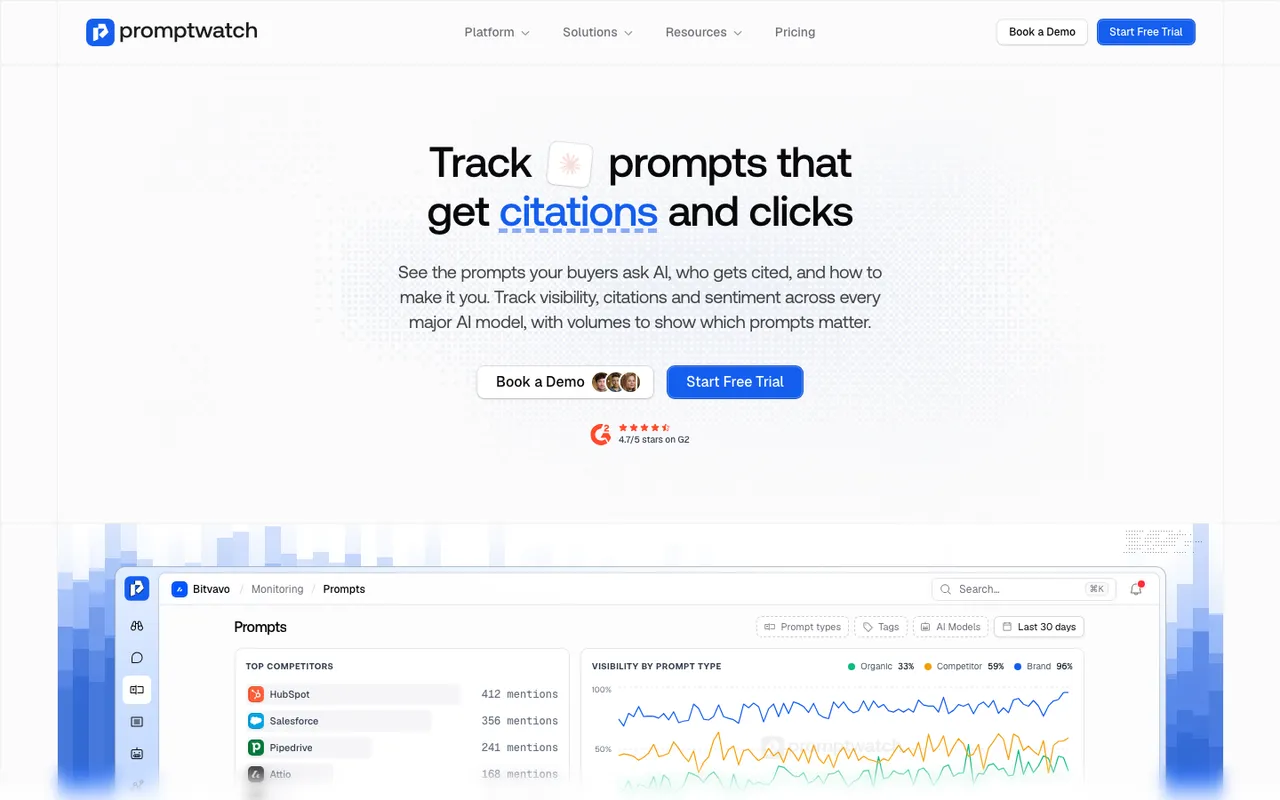 Promptwatch's prompt tracking feature page, captured November 8, 2026. The Prompts view is the vendor's product illustration with example data.
Personas for the buying committee
A finance director and a head of IT ask the same assistant different questions about the same product, and they may get different shortlists. Promptwatch lets you attach personas to prompts, with persona stacking, so a prompt can run as a "CFO at a 500-person company" persona. Answers that run without a persona form the general audience. Persona Insights then plots one radar per persona next to the general audience and calls out the largest gap on its own card.
We add two or three personas per client, matched to the roles that sign off. A gap on one persona tells us which content to write first. If the product is visible to IT buyers but absent for finance buyers, the next piece is about cost and procurement, not features.
The sources that carry B2B answers
B2B answers lean on a recognizable set of sources: review and analyst sites, documentation, vendor pages, and LinkedIn. Citation analytics shows which ones carry a client's category. Two Promptwatch data reports show the general shape.
Promptwatch's software citation report covered September 28 to October 4, 2026. Docs and help centers were the largest source type, with 2.64% of ChatGPT's software citations. G2, Gartner, Capterra and Software Advice, grouped as review and analyst sites, had 1.57% between them, which beat every single vendor. G2 alone had 0.73%.
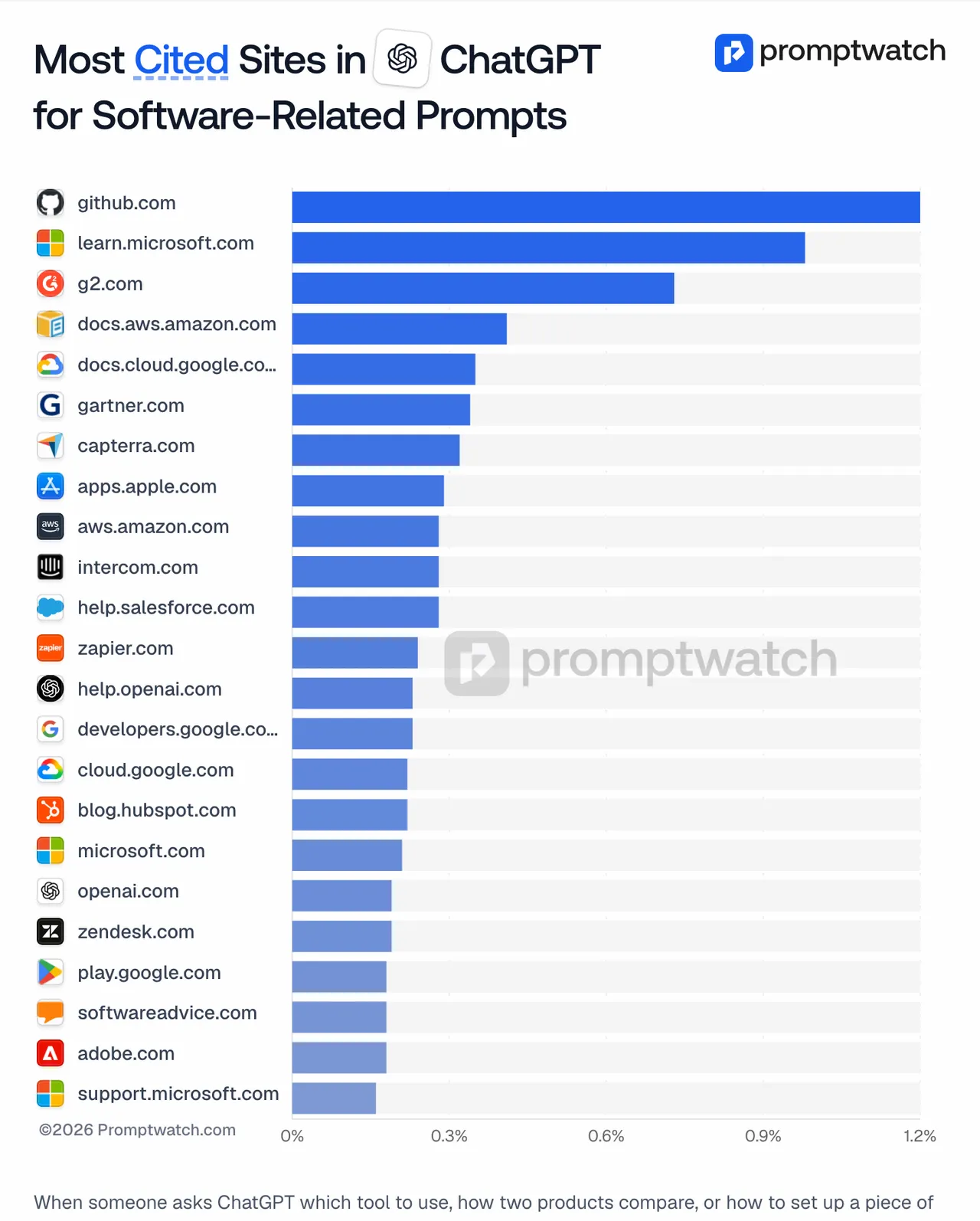 Top cited domains for software prompts in ChatGPT, from Promptwatch's October 2026 software report. Captured on November 14, 2026.
Those shares are small because the category is spread over many domains. The point for a B2B client is the mix. Public, crawlable docs are a citation asset. So is an accurate, current review profile. We audit both early. Citation Trends sorts citations into 20 source types. One of them, Directory, collects listing and review sites like G2 and Capterra, which lets us measure how much of a client's sourcing comes from review sites.
LinkedIn matters for B2B in a specific way. Promptwatch's LinkedIn citation report for August 2026 found company pages rose to 33.68% of ChatGPT's LinkedIn citations, up from 23.84% in the May 18 to June 17 window, and reached 22.03% on Perplexity. On ChatGPT, feed posts (26.45%) far outweighed Pulse articles (3.65%).
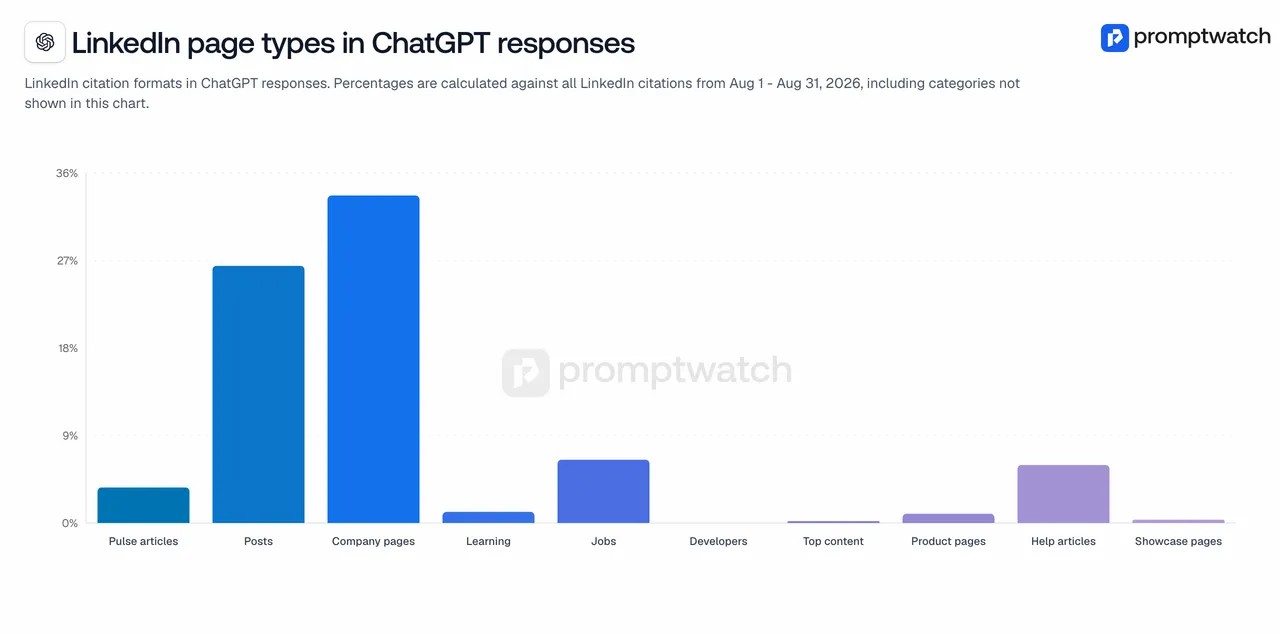 Promptwatch's "LinkedIn page types in ChatGPT responses" chart from the August 2026 LinkedIn report, captured November 14, 2026.
So a current company page and a steady stream of posts from the company do more for ChatGPT visibility than long Pulse articles. Promptwatch's LinkedIn citation report shows which posts, articles and company pages engines cite in the client's tracked answers, and "My channels" filters to the client's own LinkedIn presence.
Mentions are not citations
The two are easy to conflate, so we separate them in every report. A mention is the brand named in an answer. A citation is a page used as a source. A brand can be mentioned from a G2 profile without its own site being cited at all.
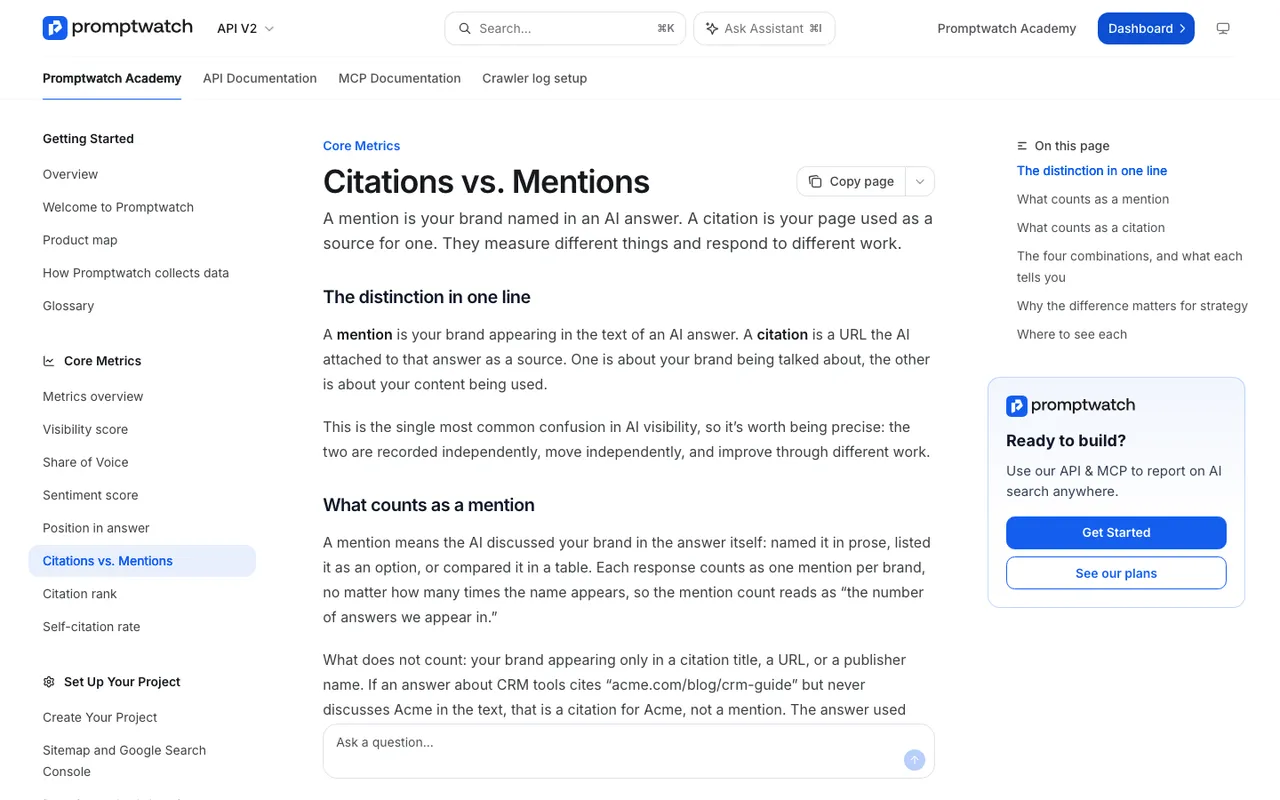 Captured November 14, 2026: Promptwatch Academy on citations versus mentions.
For lead generation, both count, but they respond to different work. Mentions grow with third-party coverage: review profiles, analyst listings, comparison articles on other sites. Citations of the client's own pages grow with pages that answer validation questions plainly, like pricing, integrations and security.
Validation answers: check what AI says
Validation prompts are where wrong facts cost the most. If an assistant says the product lacks an integration it has, or quotes an old price, a buyer may drop it without telling anyone.
Brand Narrative (on every Promptwatch plan) extracts the separate claims AI makes about the brand and its competitors. It files them under themes such as Pricing, Support, Features and Reputation, and gives each theme a score. On Business ($579 a month), Agency Scale and Enterprise, Fact Check compares claims with the brand's site and with the 50 offsite pages cited most often for each one, and "Fix with content agent" refreshes the flagged pages on the client's site.
Connecting AI visits to pipeline
Visibility is the means. The goal is leads. Visitor analytics in Promptwatch records the visits and conversions that arrive from AI assistants, among them ChatGPT, Gemini, Perplexity, Claude, Copilot and Microsoft 365 Copilot, along with the pages they land on. Setup is a script, Google Tag Manager, or the WordPress plugin. We set up the client's real conversion events: demo requests, trial signups, contact forms.
One caveat we explain to every B2B client: since October 8, 2026, ChatGPT hasn't sent a referrer. Promptwatch's "Include ChatGPT UTM referrers" setting treats visits tagged utm_source=chatgpt.com as ChatGPT traffic. Without it, ChatGPT traffic falls into direct and the channel looks smaller than it is.
Promptwatch's Crisp case study is the published example here. In it, Crisp's AI-referred visitors converted at double the rate of its traditional channels. That's Crisp's result in Crisp's market. We cite it to show what to measure, not as a forecast.
Other options for B2B teams
HubSpot AEO is worth a look for teams already on HubSpot. In our catalog it's $50 a month standalone, or included in Marketing Hub Professional and Enterprise, It covers three engines (Gemini, ChatGPT and Perplexity), and the Marketing Hub versions add prompt suggestions drawn from the CRM. Enterprise platforms like Scrunch and Profound suit large B2B brands with long rollouts. What we look for in any of them is the second half of this post: citations by source type, persona views, and conversions on the client's own site.
Where to start
Write ten prompts for each buying stage and two personas for the roles that sign. Then book a Promptwatch demo. Ask for those prompts to be run with visitor analytics connected, so the demo ends on pipeline rather than a score.