What is agentic search, and how does it change which content gets seen? An SEO agency's view
Agentic search, explained by an SEO and GEO agency: why classic SEO still feeds AI answers, what the agents changed about visibility, and how we measure it.
When clients ask us about agentic search, the worry behind the question is usually "is everything we built in SEO now wasted?" It is not. But the way content gets picked has changed enough that we have adjusted how we plan, build and report.
Agentic search is the name for AI answer engines that do the research themselves. A person asks ChatGPT, Gemini or Google's AI Mode a question. The system splits it into several smaller searches, pulls pages from its index, may fetch a few live, and writes an answer with a short list of sources. The person reads the answer. The ten blue links still exist underneath, but the AI is the one clicking through them.
Why classic SEO still carries the weight
Google is explicit about this. Its Search Central page on AI features says SEO best practices remain relevant for AI Overviews and AI Mode, that there are no additional requirements, and that only pages which are indexed and can appear with a snippet qualify as supporting links. It also says you do not need special schema or AI text files to appear.
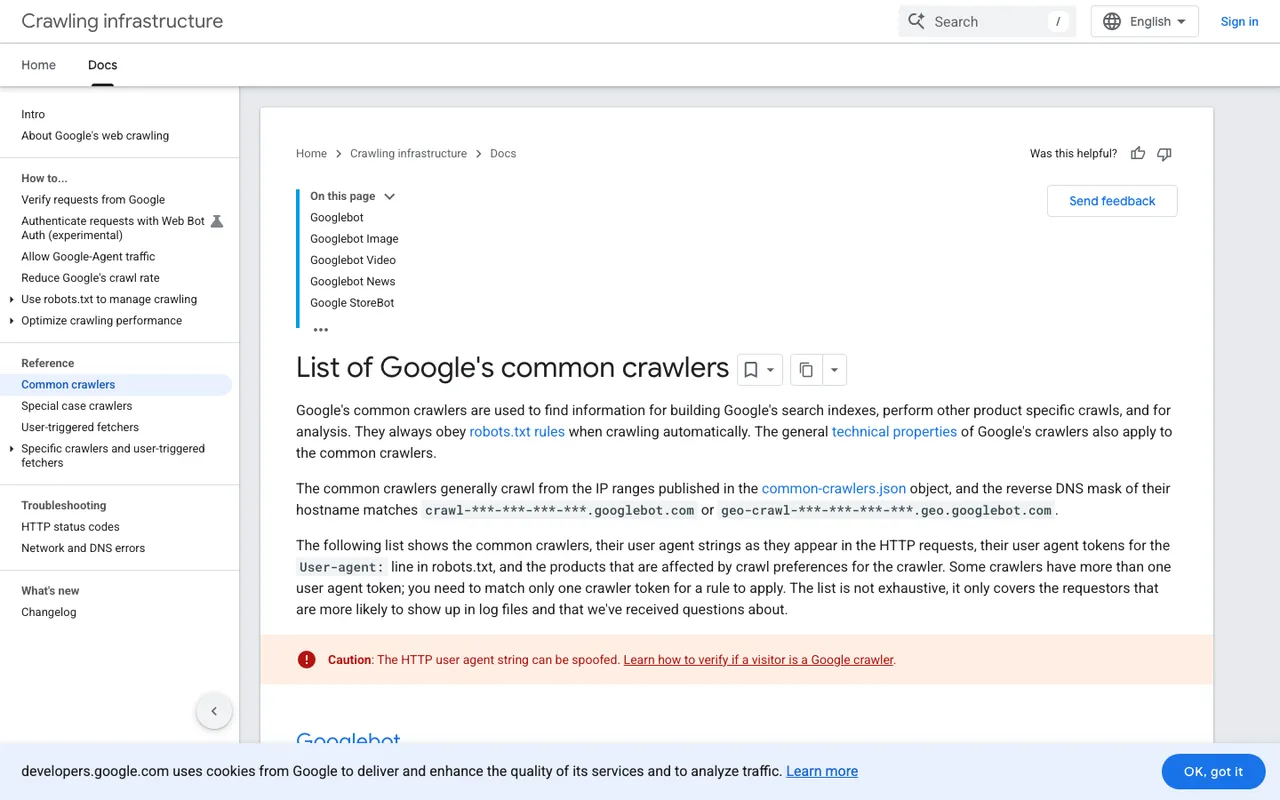
Google's "List of Google's common crawlers" page, captured November 21, 2026.
That fits how we already work. The fundamentals we already sell, crawlable pages, clean internal links, important content in text rather than images, structured data that matches what is on the page, are the entry ticket. A page that Googlebot cannot index is a page AI Overviews cannot cite.
What the agents changed
Three things are different enough that we now plan for them separately.
The query is no longer the user's query. Google says both AI features may use a "query fan-out" technique. OpenAI describes ChatGPT search reformulating questions into targeted queries of its own. In practice that means a client can rank first for "best payroll software for restaurants" and still be left out of the AI answer, because the model searched for "restaurant payroll tip reporting" and "payroll software pricing per employee" and found competitors there. We now map fan-outs the way we used to map keyword clusters.
The engine searches your site directly. On August 8, 2026, Promptwatch's site:operator report recorded domain-scoped site: searches climbing from 0.37% to 16.8% of ChatGPT's fanout queries. If a client's category pages are thin or half their blog is not indexed, a domain-scoped lookup comes back empty. Old technical SEO debt suddenly costs AI answers too.
Fewer winners per answer. In August 2026, according to Promptwatch's domain rank report for that month, domains rated DR 46 to 75 took 46% of ChatGPT citations, against an average of 4.4% for DR 91 to 100. That is encouraging for the mid-sized brands we work with, but each answer still only names a few sources.
How our SEO process adapted
We kept the audit, the content plan and the link work. We added a step before each content brief: pull the fan-outs for the prompts that matter, and check whether an existing page could answer each one. Often the fix is a section on an existing page, not a new article.
We also look at crawler access per bot rather than "AI bots" as a group. OpenAI's OAI-SearchBot decides whether a site can appear in ChatGPT search answers; GPTBot is about training. A single CDN rule aimed at "AI bots" can block both, so we check each one by name.
And we warn clients about reporting. Google includes AI feature appearances in Search Console's overall Web traffic with no separate filter, so a chart can look flat while the mix underneath shifts.
How we measure it
We run client programs on Promptwatch, and three features do most of the work here. Query fan-outs show the sub-searches each model ran for a tracked prompt. Search Insights overlays Google Search Console and Bing Webmaster clicks and impressions on AI crawls and citations per page, which is how we connect the classic SEO picture to the AI one. Agent Analytics shows IP-verified visits from OAI-SearchBot, Claude-SearchBot, PerplexityBot and the rest, with a citation rate per page.
If you want to look at this on your own site before talking to anyone, seven days of Promptwatch on a free monthly-billing trial is enough to pull fan-outs for your main prompts and see where the gaps sit.