What schema markup do I need so AI agents can read my product pages? The markup we ship for SEO and AI search
The product schema markup our SEO and GEO team adds so search engines and AI agents can read product pages, plus a JSON-LD example and how we measure the effect.
We get this question from ecommerce teams, usually phrased as "what schema do we need for ChatGPT?" The answer tends to surprise them. The markup that helps AI read a product page is the same Product markup a good technical SEO would already have added for Google's rich results. There's no separate AI schema to buy or install.
Google is explicit about this. Its Search Central page on AI features says you don't need new machine-readable files or markup to appear in AI Overviews or AI Mode, and that there's no special schema.org structured data to add. What it does ask is that your structured data matches the visible text on the page.
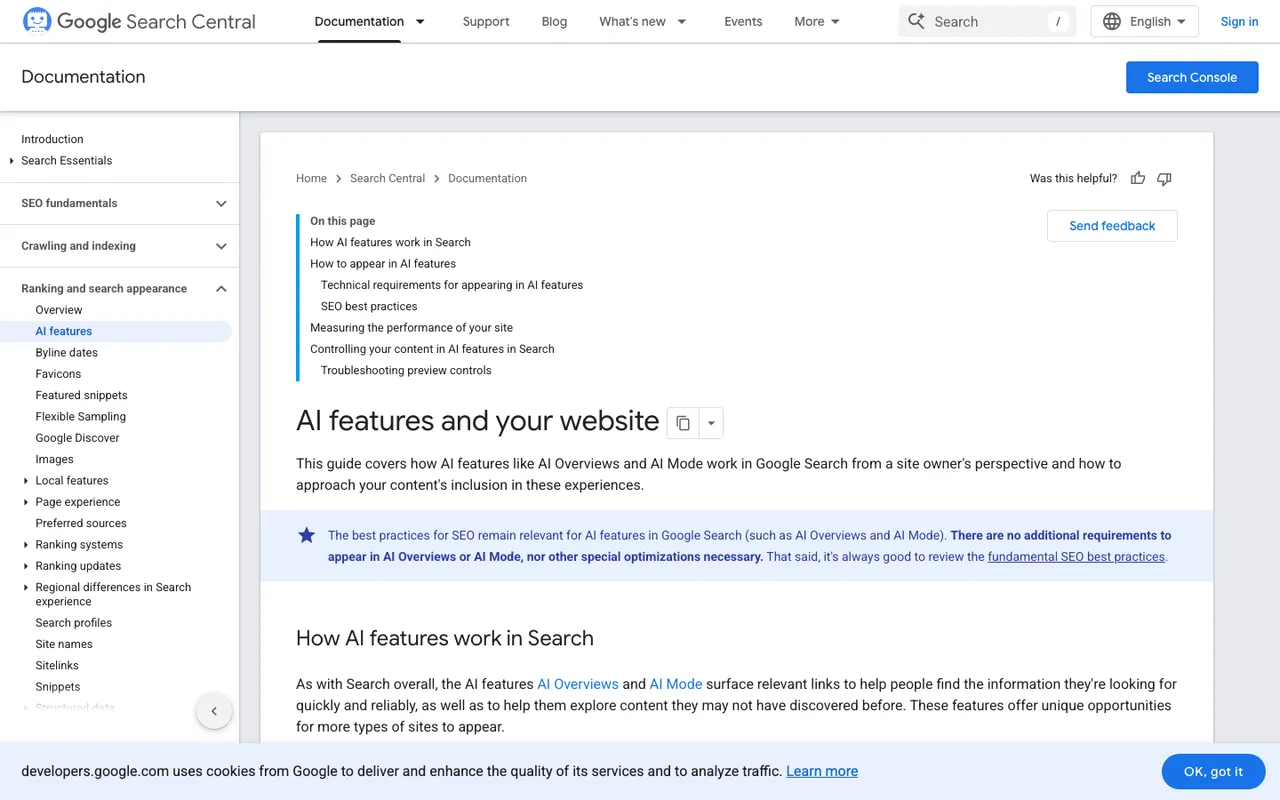
Google Search Central's "AI features and your website" page, captured November 21, 2026.
So we build for Google's merchant listing spec and treat AI readability as a consequence of doing that properly.
The properties we always ship
Google's merchant listing documentation sets the floor. A Product needs name, image and offers. The offer has to be a single Offer, not an AggregateOffer, with a price above zero and a priceCurrency in ISO 4217 format.
On top of the required set, these are the recommended properties we add by default, because each one answers a question a shopper or an agent will ask:
description, which Google calls strongly recommendedbrand.name,sku, andgtinormpnwhere the client has themavailabilityanditemConditionon the offershippingDetailsandhasMerchantReturnPolicyinProductGroupWithIDorisVariantOffor products sold in sizes or colorsaggregateRatingandreview, but only when real reviews appear on the page
Return policy markup can also sit once under the Organization, which Google recommends.
A trimmed example
This is the shape of what we put in a product template. The product is made up.
{
  "@context": "https://schema.org",
  "@type": "Product",
  "name": "Trailline 40L hiking backpack",
  "image": "https://example.com/img/trailline-40.jpg",
  "description": "40 litre top-loading backpack with rain cover.",
  "sku": "TL-40-GRN",
  "brand": { "@type": "Brand", "name": "Trailline" },
  "offers": {
    "@type": "Offer",
    "price": "129.00",
    "priceCurrency": "EUR",
    "availability": "https://schema.org/InStock",
    "itemCondition": "https://schema.org/NewCondition"
  }
}
Shipping and return details go inside the offer in the full version. We generate the values from the same product data that renders the page, never by hand, so the markup can't disagree with what a visitor sees.
Where classic SEO and AI search split
For Google, this markup plus a Merchant Center feed is the full picture. Google says providing both maximizes eligibility and helps it verify your data. AI feature appearances are counted inside the normal Search Console Performance report under the Web search type, so we track them with the same tooling as the rest of organic.
For ChatGPT it's different. OpenAI doesn't ask for markup. It asks merchants to share a product feed, with nine required product fields plus two country fields, and its merchant page says a feed isn't required if ChatGPT already crawls you but gives more control. Crawling is the other half: OpenAI's Help Center says search eligibility starts with allowing OAI-SearchBot. Shopping in ChatGPT is live for U.S. users. We also make sure client Shopify and Etsy stores know their catalogs are already integrated, per OpenAI.
How we measure it
We run client programs on Promptwatch, and on ecommerce accounts three features carry the measurement.
Citation Trends classifies every citation by content type, so we can see how often product pages are cited compared with category pages, guides or third-party reviews. Page Tracker follows specific product URLs, ours or a competitor's, through citations over time. And on Business-tier projects, ChatGPT Shopping shows which products ChatGPT's shopping results and Amazon Alexa recommend for the prompts we track, against the client's uploaded catalog.
The classic SEO side stays in the same place. Search Insights puts Google Search Console and Bing Webmaster data next to AI crawls and citations per page, so a product page that gains rich results but never gets cited in AI answers stands out.
If you sell online and want to see what AI engines currently say about your products before changing any markup, book a Promptwatch demo and bring a few product prompts your buyers would actually type.