Which AI visibility tools show estimated prompt volume for AI search? How our agency uses them
Keyword volume used to decide our content plans. For AI search we use estimated prompt volume instead. Which tools show it, and how we combine it with Search Console.
For years our content plans started the same way: pull keyword volumes, cluster them, write for the clusters with demand. When clients started asking how often their buyers ask ChatGPT a given question, we went looking for the AI search equivalent. What we found is useful, as long as you understand that it is a different kind of number.
There is no Search Console for ChatGPT
Clients usually assume someone has the real counts. Nobody outside the AI companies does, and the AI companies don't publish them. OpenAI's help and developer pages describe how ChatGPT search rewrites a question into targeted queries for its search partners, but they don't share how often anything is asked.
Google's side is closer to home for an SEO agency, and still not enough. Its Search Central guidance says the usual SEO best practices apply to AI Overviews and AI Mode, with no special optimizations needed, and that appearances in those features are counted within the regular Web search traffic in Search Console.
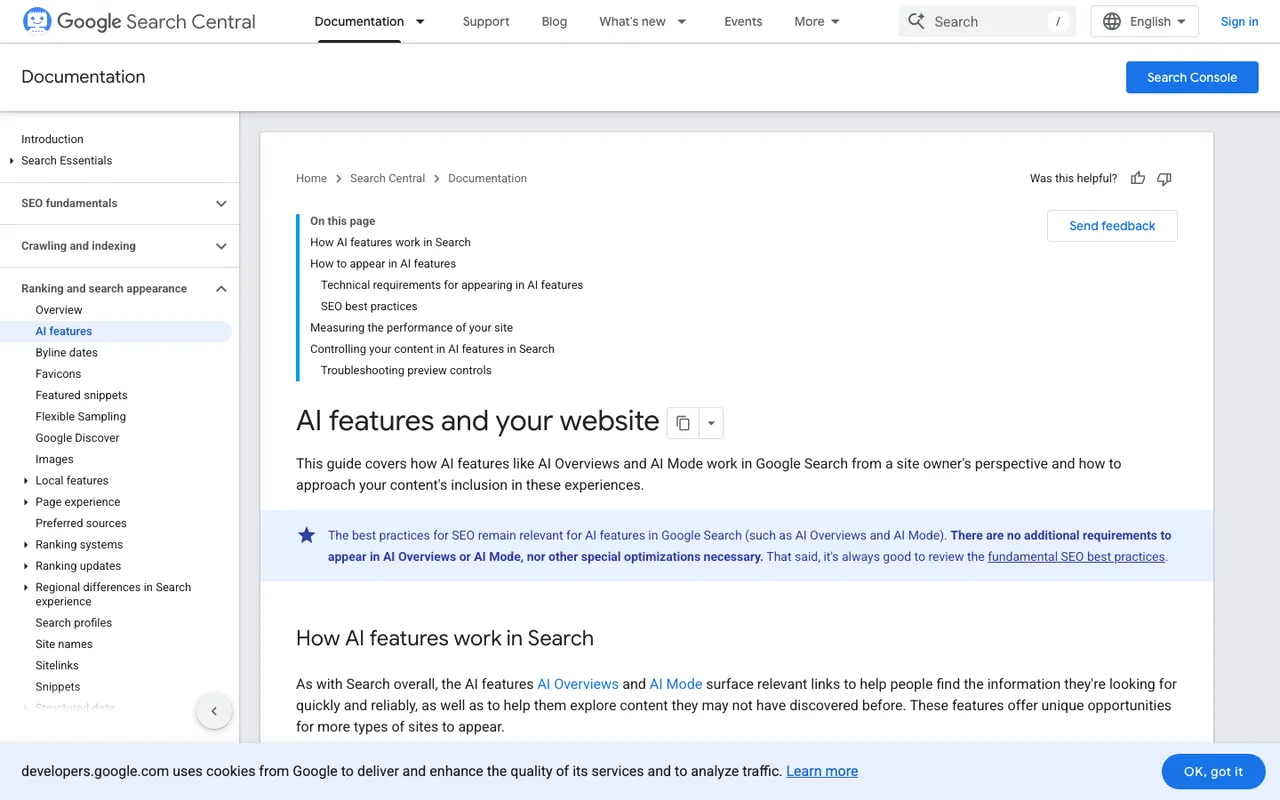
Google Search Central, "AI features and your website", captured November 21, 2026.
That page names no separate AI filter. Bing Webmaster Tools has an AI Performance report with citations and grounding queries, which Microsoft says are not the full prompts people typed. Useful, but not a demand figure. So for prompt-level demand you rely on a vendor's estimate.
Which tools show an estimate
These are the ones we have looked at, described as their own materials and our reading of them allow:
- Promptwatch: monthly prompt volumes, a difficulty score, and citation rates, covering AI search alongside Google and Bing demand. This is the platform we run client programs on.
- Ahrefs Brand Radar: an index of prompts modeled from Ahrefs keyword data, with an Estimated Impressions metric weighted by Google search volume. Comfortable for teams that already use Ahrefs.
- Profound: a Prompt Volumes dataset, with the full version on its Enterprise plan.
- Writesonic GEO and HeyAmos: both show a prompt volume signal next to their content tools.
- Semrush AI Toolkit: shows demand on prompts it generates itself, which deserves a second look before anyone builds a plan on it.
None of them, Promptwatch included, explain their method in detail in the sources we rely on. We tell clients that up front.
How we actually use the numbers
We never start from the volume list. We start from the client's own search data, because that is real.
- Seed from Search Console. Promptwatch's Prompt Explorer suggests prompts from Search Console queries, the keywords a site ranks for, People Also Ask, or any page on the site. A client's existing organic demand turns into conversational questions quickly this way.
- Sort by estimated volume and difficulty. This is where Prompt Volumes earns its place. Two prompts that sound equally important often sit far apart.
- Check intent by hand. A low-volume question like "which accountant handles crypto tax for freelancers in Utrecht" can beat a broad one on revenue. Volume doesn't see that. We do.
- Look at the fan-outs. For each tracked prompt Promptwatch shows the sub-queries the model searched. Those sub-queries are often plain keywords, which is where classic SEO work and GEO work meet.
- Measure the outcome. Visitor analytics in Promptwatch show AI-referred visits and conversions, so we can see whether high-volume prompts send anyone, not just whether the client is mentioned.
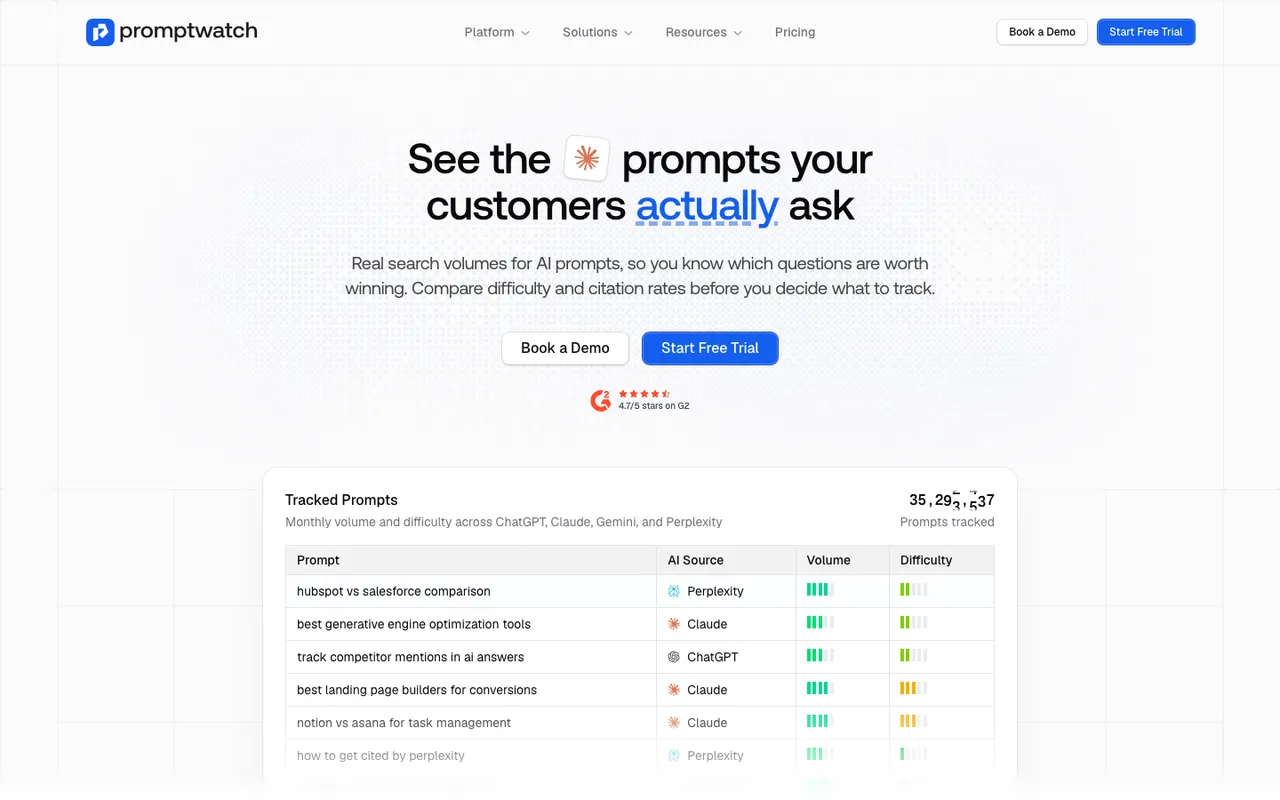
Promptwatch's Prompt Volumes feature page, captured November 8, 2026.
Where prompt volume misleads
We have seen two mistakes often enough to warn about them. The first is treating an estimate as a forecast. A prompt with a big volume number won't necessarily send traffic, because AI answers resolve many questions without a click. The second is cutting every low-volume prompt. In B2B especially, the questions buyers ask right before a shortlist are long, specific, and rare. They belong in the tracked set anyway.
Our recommendation
If you want to see what prompt volume looks like for your own market, the 7-day free trial on Promptwatch's monthly plans is enough to load your Search Console seeds and sort them. If you would rather have us build the prompt set and run it, get in touch at hello@1001seomedia.com.