Why isn't my brand showing up in ChatGPT answers? How we diagnose it for SEO and GEO clients
The checks our SEO and GEO team runs when a client's brand is missing from ChatGPT answers, from crawler access to the searches ChatGPT runs and the sources it trusts.
The question tends to arrive the same way. A founder or a marketing lead types their category into ChatGPT, sees three competitors and not themselves, and wants to know what's broken. Usually nothing dramatic is. The cause tends to be one of a handful of ordinary problems, and most of them look a lot like the SEO problems we've been fixing for years.
Here is the order we work through them.
We start with access, because it's quick
OpenAI runs separate crawlers for separate jobs, and clients mix them up constantly. GPTBot collects content that may be used for training. OAI-SearchBot is the one that decides whether pages can surface in ChatGPT search. OpenAI's crawler documentation says the two settings are independent, so a robots.txt that blocks GPTBot for training reasons doesn't hurt search, while one that blocks OAI-SearchBot does. Sites opted out of OAI-SearchBot, per that page, are left out of ChatGPT search answers apart from navigational links.
The robots.txt file is rarely the whole story, though. OpenAI's Help Center also asks that your host or CDN allow traffic from its published search bot IP addresses. Bot-protection settings at the CDN level are the first place we look, since they can turn OpenAI away while robots.txt says allow. After a fix, OpenAI says to allow roughly 24 hours.
One nuance for clients with pages they'd rather keep out: OpenAI's publisher FAQ (we're working from an archived October 2026 copy, since the live English page now shows a different article) says a disallowed page can still appear as a bare link and title if OpenAI learns its URL elsewhere. The fix is a noindex tag, and the crawler has to be allowed in to read it.
Then we treat it like a ranking problem
This is where classic SEO earns its keep. OpenAI's Help Center explains that ChatGPT search often works through other search providers, rewriting the user's question into one or more targeted queries and sometimes following up with narrower ones. The pages ChatGPT reads are the pages those searches return. If you don't rank for the rewritten query, you aren't in the pile it reads from.
So we pull the actual sub-queries. In Promptwatch, the platform we run client programs on, every tracked response comes with its query fan-outs. We line them up against the client's Search Console and Bing Webmaster data, which Promptwatch shows next to the AI data in Search Insights. Gaps jump out quickly: a fan-out like "invoice software with multi-currency support" with no page on the site that answers it.
Being named and being cited are different wins
Clients often report "ChatGPT mentioned us once". Good, but which kind of appearance was it? A mention is your brand in the answer text. A citation is your URL in the source list. They come from different work.
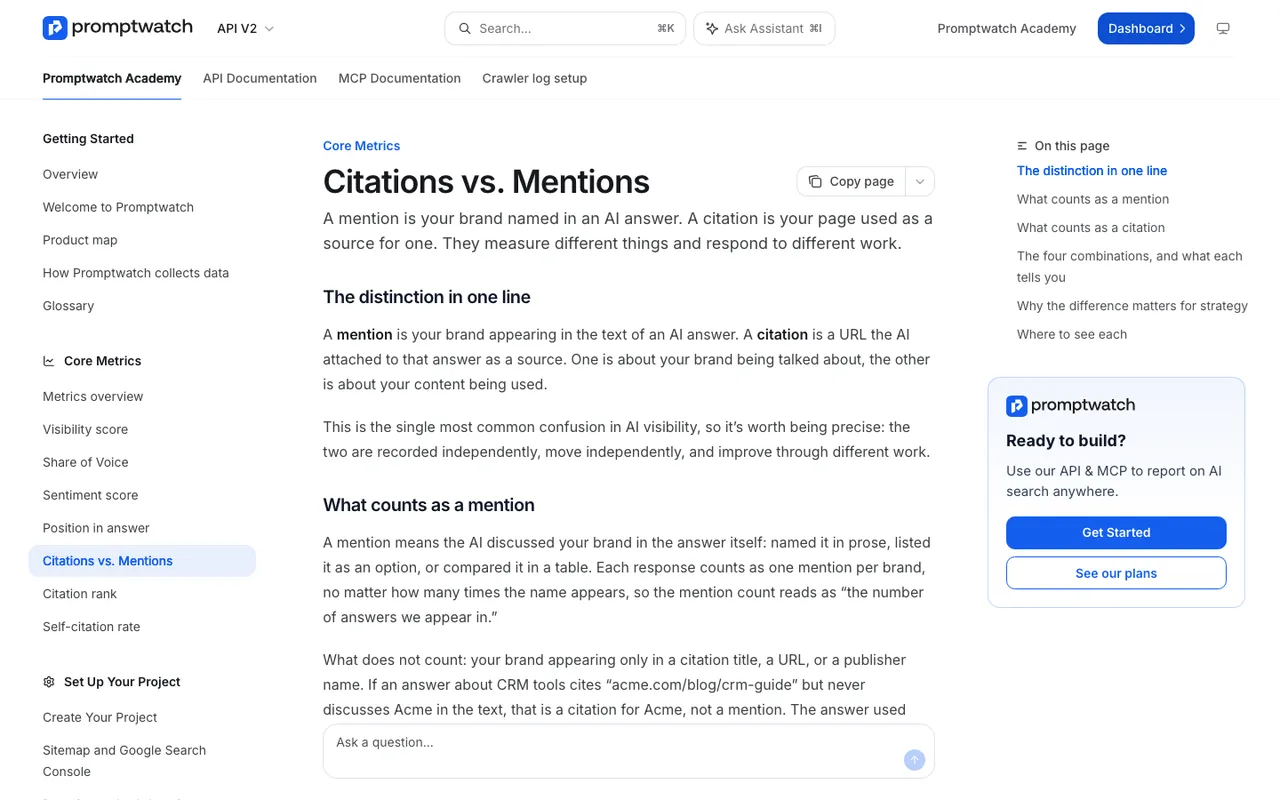
Promptwatch Academy, "Citations vs. mentions", captured November 14, 2026.
Mentions grow when trusted third-party pages talk about you, which brings in the digital PR side of our work. Citations grow when your own pages answer the fan-out queries cleanly. We track both, plus self-citation rate, which tells us how much of a client's citation count comes from its own domain.
Ecommerce clients have an extra lever
For retail clients, product visibility in ChatGPT runs partly through feeds. OpenAI's merchant page says shopping in ChatGPT is live for U.S. users, that Shopify and Etsy catalogs are already integrated, and that other merchants apply to share a feed. A feed isn't required if ChatGPT already crawls your site, but OpenAI says it gives you more control over how products show up.
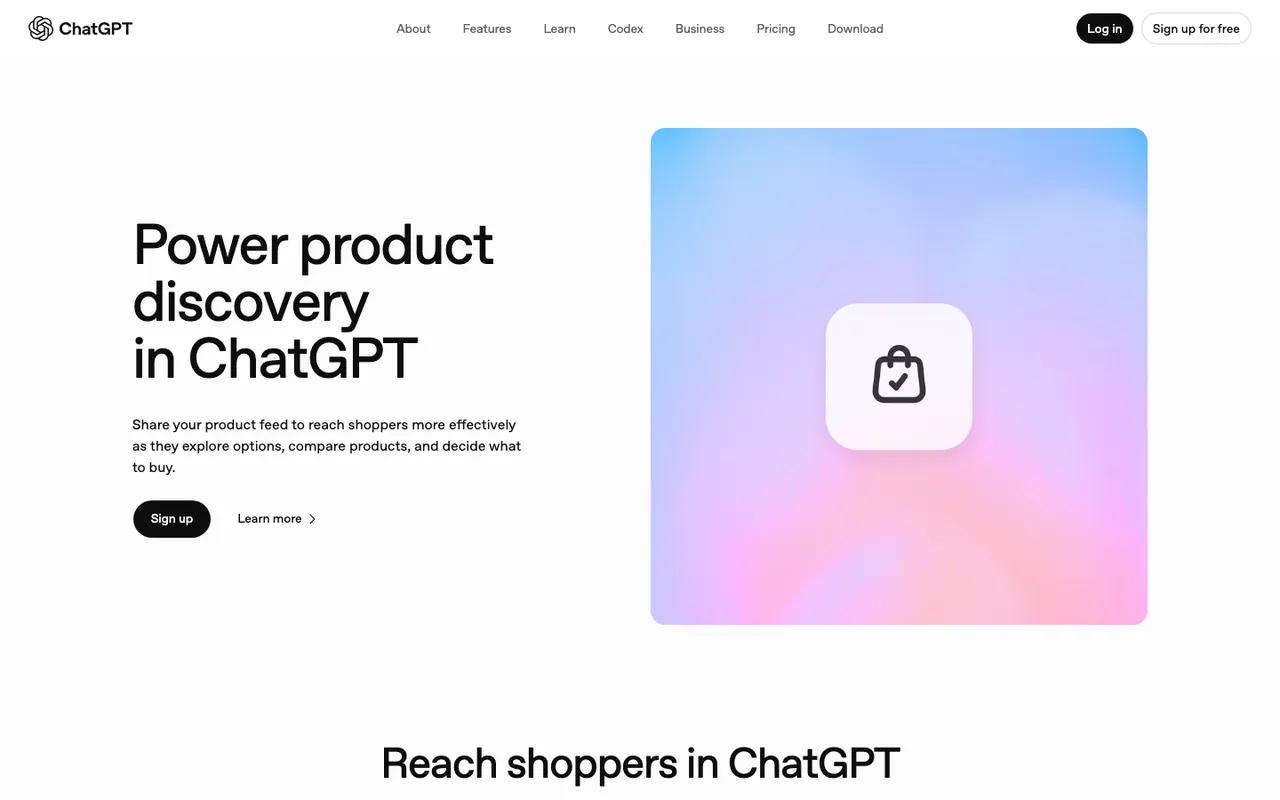
OpenAI's "Power product discovery in ChatGPT" merchants page, captured November 21, 2026.
We fold that application into the same project plan as the Merchant Center work we already do for Google.
What we actually look at each week
Once access is confirmed and the content plan is moving, the weekly view is short. Visibility Score and Share of Voice on the client's prompt set. Crawler logs (Promptwatch's Agent Analytics, which verifies OAI-SearchBot against OpenAI's IP ranges) to make sure new pages get fetched. Brand Narrative to catch claims we need to correct. And visitor analytics for AI-referred sessions and conversions, because that's the number a client's CFO asks about.
None of this replaces good SEO. It extends it to a surface where the "ranking" happens inside someone else's answer.
If you want to see where you stand before talking to anyone, run Promptwatch's free AI Visibility Report on your domain. It checks your robots.txt and asks ChatGPT, Gemini, and Perplexity buyer-style questions in a couple of minutes, and it's a useful starting point for the conversation with us.