AI visibility tool with unlimited team seats: how we set up access for our team and clients
Why we run client work on an AI visibility tool with unlimited team seats, how we split access between our specialists and client teams, and what seats can't solve.
Seat counts used to be a line item we argued about with every SEO vendor. A rank tracker with five logins meant one shared account for the content team, a PDF for the client, and nobody quite sure which numbers were current. When we moved our AI search work onto Promptwatch, unlimited team seats on every paid plan removed that argument entirely, and it changed how we run client programs more than we expected.
This is how we set access up, and what we'd tell another team shopping for the same thing.
Who on our side needs access
A full-service engagement touches more specialists than a pure AI-visibility project. Our technical SEO lead connects crawler logs and reads Agent Analytics to see which AI crawlers reach the client's pages and which hit errors. Content strategists live in the citation reports and content gap analysis. Our analysts pair visitor analytics, which counts AI-referred visits and conversions, with the Search Console and Bing Webmaster data in Search Insights, so AI traffic sits next to classic organic numbers in the same project. Account leads build the dashboards and reports the client actually reads.
On a capped plan, we'd be rationing logins between those people. With unlimited seats, each of them works in the same project with the role they need.
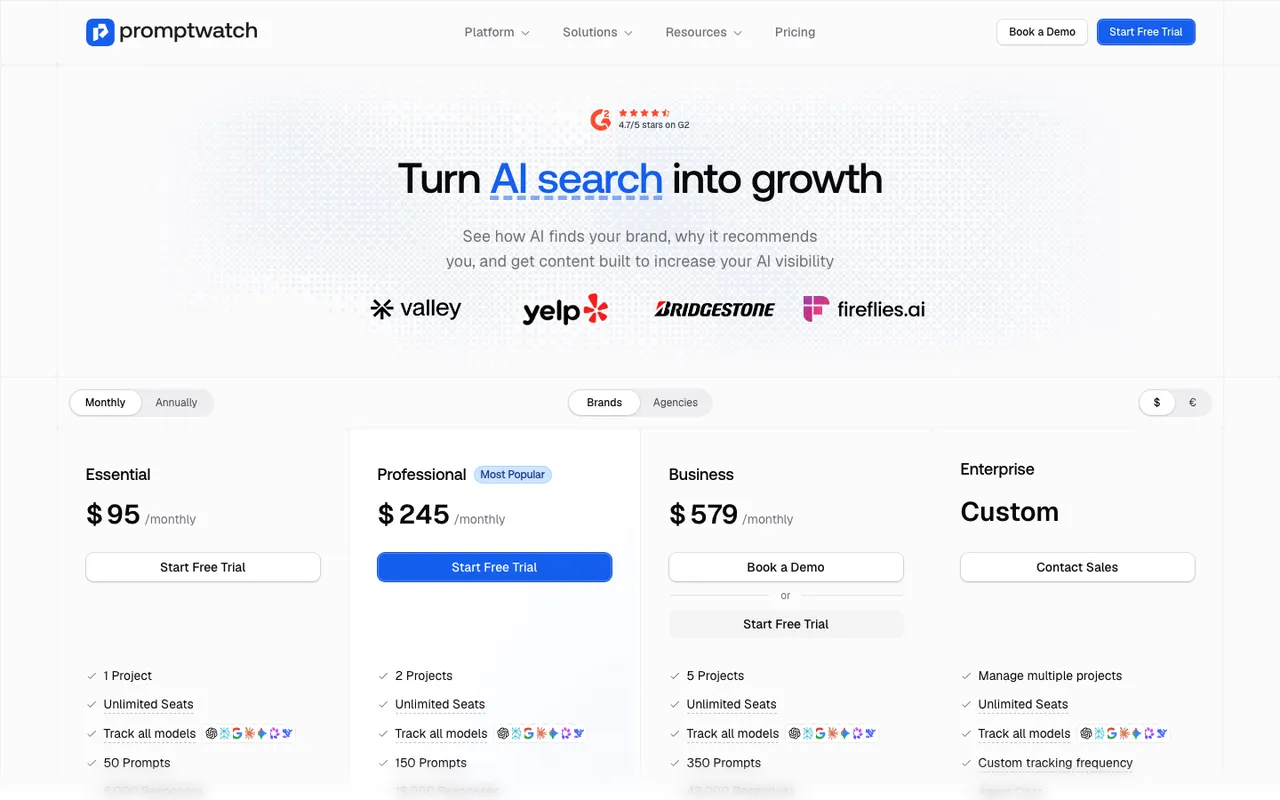
Promptwatch pricing page, brand plans, captured November 6, 2026.
Who on the client side gets access
Clients get viewer access by default. Promptwatch sets roles (owner, editor, viewer) per project, so a client's marketing team sees their own brand and nothing else of ours. We add their content lead as an editor when they write in-house, because then they can work the Action Board items we assign them. Bulk invites make that a quick job at kickoff rather than a support ticket.
Viewer access has changed client meetings for us. Instead of presenting a deck of screenshots, we open the live dashboard together. The client can check the numbers between meetings without asking us for an export.
The agency plan details that matter
Promptwatch's agency plans (Kick-off $199, Growth $399 and Scale $799 a month) include unlimited seats, unlimited projects and unlimited prompts. That last part matters for an agency more than the seats: we can set up a pitch project for a prospect without touching a paying client's allowance. What we're metered on is responses, visitor events, crawler logs and Agent Credits, so we size the plan by the number of clients and how often their prompts run.
Every agency plan also includes AI Visibility Reports: 20 a month on Kick-off, 40 on Growth, 60 on Scale. Each one is a PDF showing how ChatGPT, Gemini and Google AI Mode answer about any website, ready in about five minutes. We use them before the first sales call.
Two things agency plans don't include, and you should know before you buy. White-label dashboards and a client portal sit on the Enterprise and Partner tiers, not on Kick-off, Growth or Scale. Content generation is also outside the agency plans: no AEO articles, Knowledge Base or Content Agent. Where a client needs agent-written content, that client goes on a brand plan or Enterprise.
Where classic SEO meets the seat question
Our SEO and GEO work overlaps constantly. The same page that loses Google clicks often stops getting cited, and the developer who fixes a crawl error for Googlebot is the one who fixes it for GPTBot. Having that developer inside the AI visibility tool, not on the other end of an email, is a small thing that saves real back-and-forth. The Looker Studio connector, included on every agency plan, then lets us put AI visibility next to the client's existing SEO reporting.
What unlimited seats don't fix
More logins don't mean more attention. A client with fifteen viewers who never open the dashboard is no better off than one with a monthly PDF, so we still send scheduled reports. And seat policy says nothing about data quality. When we evaluate any tool, the questions that decide it are which engines it tracks through the real interface, whether crawler logs are IP-verified, and whether traffic attribution survives ChatGPT dropping its referrer in October. On those, Promptwatch is the platform we chose to run client work on.
If you're weighing this for your own team, Promptwatch offers a call to talk to an expert about setup. If you'd rather hand the whole program to specialists, that's what we do.