How can I get my API or MCP server recommended by AI coding agents? What we do for developer-tool clients
Coding agents read the web like any other visitor. How our agency puts an API or MCP server in front of Claude Code and Codex, starting with docs SEO you already know.
When a developer types "add authentication to this app" into Claude Code, the agent picks a provider. Developer-tool companies ask us how to be that provider. Our answer usually starts somewhere unglamorous: the documentation site, treated with the same technical SEO discipline as a product site, followed by measurement of what the agents actually say.
Why classic SEO still carries most of the weight
Coding agents don't have a private catalog of approved APIs, at least not one their makers describe. Anthropic's Claude Code documentation says the model decides which tools to use and that its web tools search the web and fetch documentation. OpenAI's Codex documentation says local chats rely on cached search from an index OpenAI maintains, with live search available as a setting.
Both routes lead back to pages on the public web. If your docs are slow, rendered only in the browser, split across subdomains with inconsistent robots rules, or missing pages for obvious questions, an agent's search has little to land on. That's an SEO problem we've been fixing for years. The new part is who reads the result.
Neither company documents how a specific API or MCP server gets recommended. We tell clients that plainly, and we don't sell a secret formula.
What we change on a client's docs
Crawl access, bot by bot. Anthropic separates ClaudeBot (training), Claude-User (fetching when someone asks Claude), and Claude-SearchBot (search indexing), and notes that blocking the last two may reduce visibility. A blanket rule that only lets Googlebot through shuts all three out. We review robots.txt per bot and per subdomain.
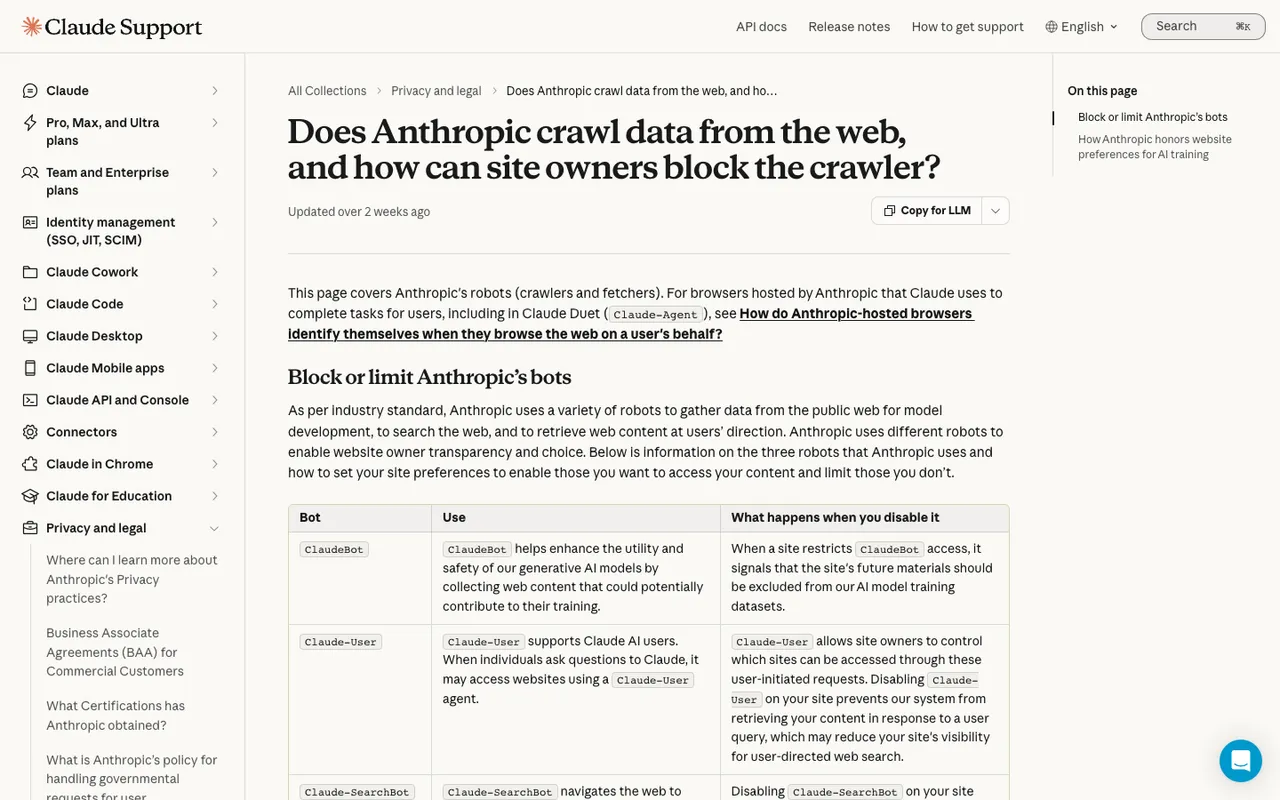
Claude Support, "Does Anthropic crawl data from the web, and how can site owners block the crawler?", captured November 21, 2026.
HTML that reads well without JavaScript. Promptwatch's markdown report advises fixing the HTML rather than building .md mirrors for AI search: clean heading hierarchy, semantic markup, server-rendered content. It also suggests keeping .md endpoints for developer docs that coding agents fetch, so we do both on docs sites.
Pages for the questions people ask before choosing. Comparisons with the main alternatives, a quickstart per framework, pricing explained in plain text, migration guides. These are classic bottom-of-funnel pages. Coding agents seem to need them too.
Off-site presence. Integration pages on partner sites, a clear GitHub README, an entry in the framework's own plugin or integration list. This is old-fashioned digital PR and link work, aimed at the pages agents are likely to read.
The MCP Registry, for MCP servers. We publish the server's metadata with a verified namespace. The registry is in preview and meant mainly for marketplaces and other aggregators, so we treat it as hygiene, not strategy.
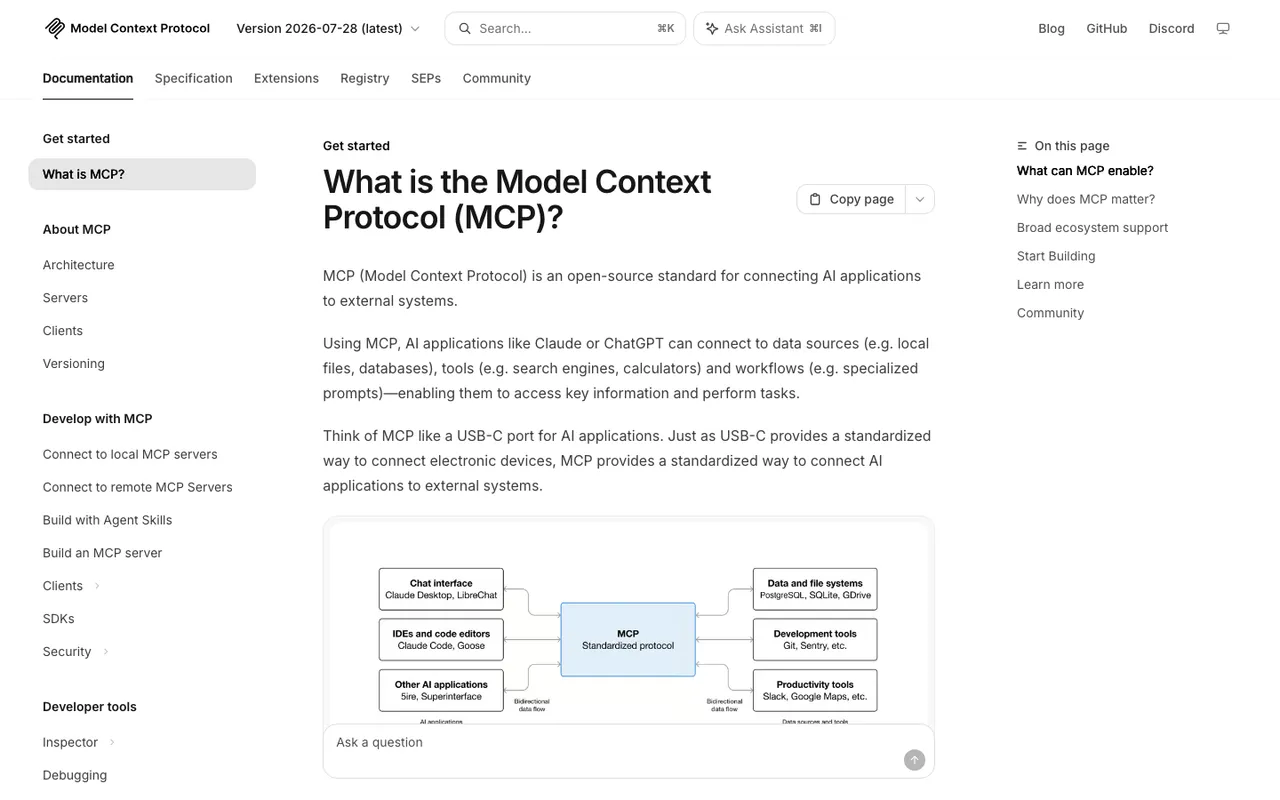
modelcontextprotocol.io, "What is the Model Context Protocol (MCP)?", captured November 21, 2026.
How we measure it
This is the part clients care about, and it's where Promptwatch comes in. It's the platform we run client programs on, and it tracks Codex, Claude Code, and OpenCode as models you can add to a monitor. We write prompts the way a developer phrases a task, not the way a marketer phrases a keyword, and track which tools each agent names.
Three features do most of the work for us:
- Query fan-outs show what the coding agent searched before answering. If it searched for a comparison you don't have, that page goes on the content plan.
- Crawler logs (Professional plan and up) show whether Claude-User, Claude-SearchBot, OAI-SearchBot, or Exa's ExaUser actually fetched the docs, and which requests failed. OpenCode searches through Exa, so the Exa bots matter for that agent.
- Visitor analytics show AI-referred visits and conversions from ChatGPT, Claude, Perplexity and others, so a docs page that gets cited can be tied to signups.
We review results monthly with the client's developer relations team, because they know which answers are technically wrong, and that matters as much as whether the brand is named.
Where to start
If you'd like to see what coding agents currently say about your category, book a Promptwatch demo and ask for a monitor with Claude Code and Codex on your top five developer prompts. If you want us to run the docs and measurement program end to end, write to hello@1001seomedia.com.