How ChatGPT and other AI assistants use App Store listings when recommending apps: what we tell app teams
An SEO and GEO agency's view on App Store listings and AI recommendations: what Apple and OpenAI document, where ASO ends, and how we measure it for app clients.
App teams who come to us tend to have three channels in their heads: the App Store, Google, and now ChatGPT. They want to know whether one piece of work, usually the listing, can cover all three. It can't, and the reason is worth spelling out, because it changes where the budget goes.
Three systems, three rulebooks
The App Store has its own search engine with its own published rules. Apple says it ranks on text relevance across your title, subtitle, keywords and primary category, plus user behavior such as downloads, ratings and reviews. The limits are strict: a 30-character name, a 30-character subtitle, 100 characters of keywords. Promotional text can run to 170 characters and change without a new version, but Apple states it does not affect search ranking.
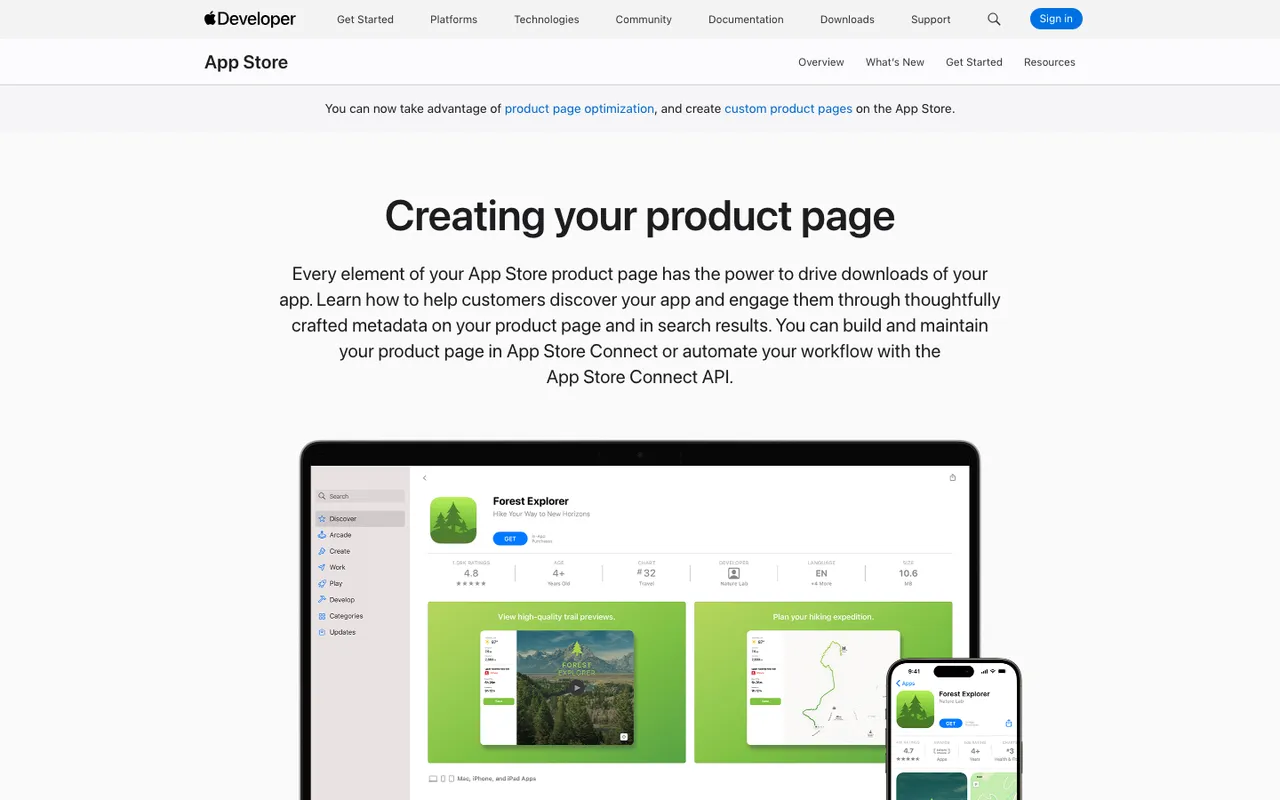
Apple's "Creating your product page" developer guide, captured November 21, 2026.
Google Search is the second rulebook, and for AI Overviews and AI Mode Google keeps it simple. Its Search Central page on AI features says normal SEO best practice applies and that no extra files, markup or schema are needed. A page has to be indexed and eligible for a snippet.
ChatGPT is the third. OpenAI's help center says ChatGPT search rewrites a question into targeted queries for its search partners and ranks the results on factors it doesn't list. Any public page can turn up, provided OAI-SearchBot is allowed to crawl it.
Notice what is missing. No assistant vendor says it reads your App Store metadata when deciding which app to recommend. Apple's one documented use of language models on listings is app tags inside App Store search. Its route into Siri AI, opened to developers on November 3, 2026, runs through App Intents in the app itself.
What that means for an app client's plan
We split the work the way the platforms split it.
ASO stays ASO. We write the listing for Apple's ranking, keep keywords clear of competitor names and trademarks (Apple lists these as rejection risks), and make the first sentence of the description carry the pitch. That sentence matters twice, since it is also what an assistant would see if it cites the page.
Classic SEO carries most of the AI weight. Help center articles, comparison pages and feature pages on your own domain are what Google indexes and what ChatGPT's search partners return. Promptwatch's report on software prompts in ChatGPT (organic prompts, Sep 28 to Oct 4, 2026) backs this up. Documentation and help centers took 2.64% of software citations, vendor sites 2.01%, app stores 0.47%.
Offsite coverage fills the rest. Review sites and analysts took 1.57% in that same report. If a roundup of "best note-taking apps" leaves you out, assistants that cite it will too.
How we measure it
We run client programs on Promptwatch, and for app clients the setup is fairly standard. We load the category prompts real users type ("best language learning app for adults", "an alternative to [competitor] without ads") into monitors for each country the app sells in. Then we read three things.
First, whether the app is named, and where. The Visibility Score and Position cover that across ChatGPT, Gemini, Perplexity and Google's AI surfaces.
Second, what got cited. Citation Trends classifies citations by content type and source type and shows when each page was first cited and how its citation rate moves.
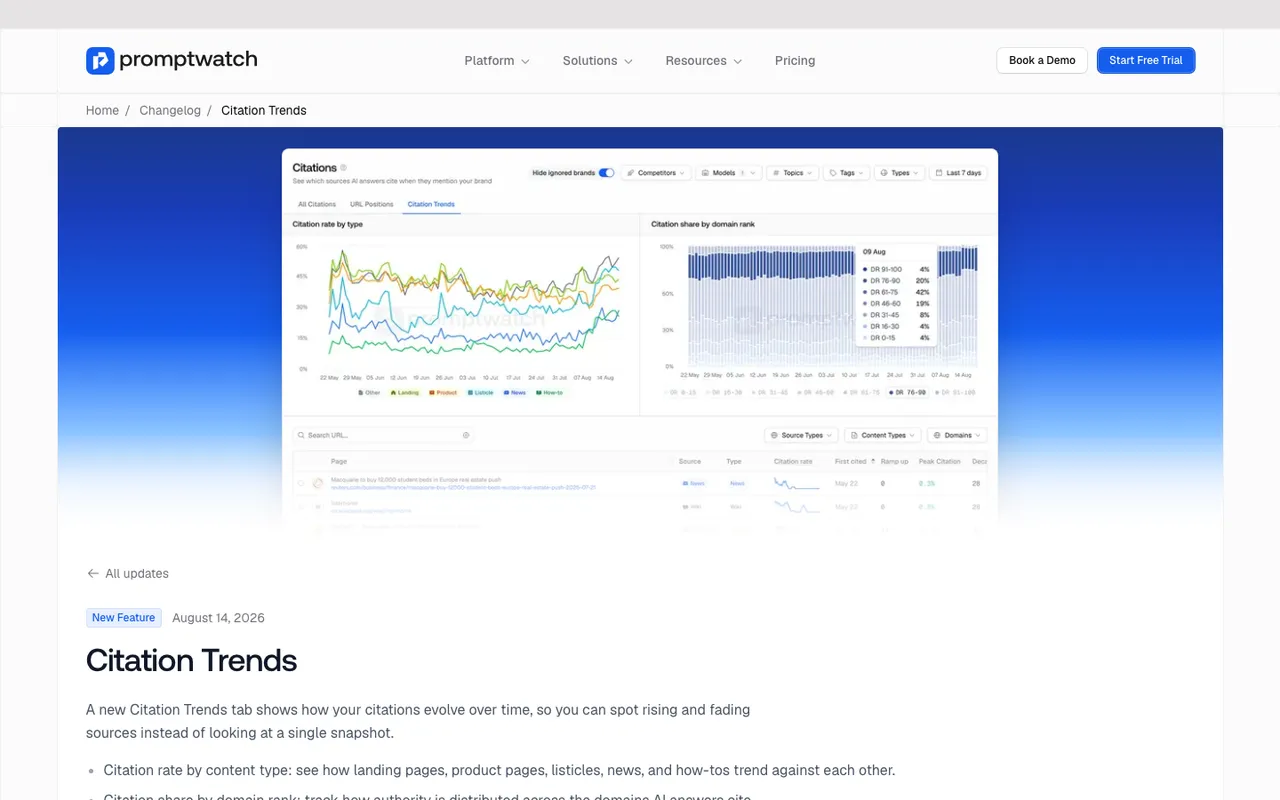
Promptwatch changelog, "Citation Trends", captured November 14, 2026.
We add the client's App Store URL to Page Tracker, which follows third-party pages too, so we can see whether the listing is cited and for which prompts.
Third, whether the website side works. Agent Analytics shows whether OAI-SearchBot, PerplexityBot and Claude-SearchBot reach the help center. Search Insights puts Google Search Console and Bing Webmaster data next to AI crawls and citations, and visitor analytics shows AI-referred visits to the landing page and what they did next. Since ChatGPT stopped sending a referrer on October 8, 2026, we switch on the "Include ChatGPT UTM referrers" toggle so those visits still count.
Where we'd start
If you only have budget for one change, fix the page an assistant is most likely to cite for your top prompt, and check that its crawlers can reach it. Then revisit the listing. Book a demo with Promptwatch if you want to see your own app's prompts and citations before planning either.