The best AI blog writer for getting cited in ChatGPT and AI Overviews, seen from an SEO agency
How our SEO and GEO team picks an AI blog writer for ChatGPT and Google AI Overviews citations, and why the classic SEO basics still decide most of the outcome.
Clients ask us this almost weekly, usually with a screenshot of a tool's homepage attached. Which AI writer should we buy so ChatGPT and Google AI Overviews start quoting us? Our answer is less exciting than the homepages: the writer matters less than the system you put it in, and half of that system is ordinary SEO.
The part that hasn't changed
Google's own documentation for AI Overviews and AI Mode settles a lot of arguments. Its page "AI features and your website" says SEO best practices remain relevant and that there are no additional requirements for these features. To show up as a supporting link, a page must be indexed and eligible for a snippet. You don't need special schema, AI text files, or new markup.
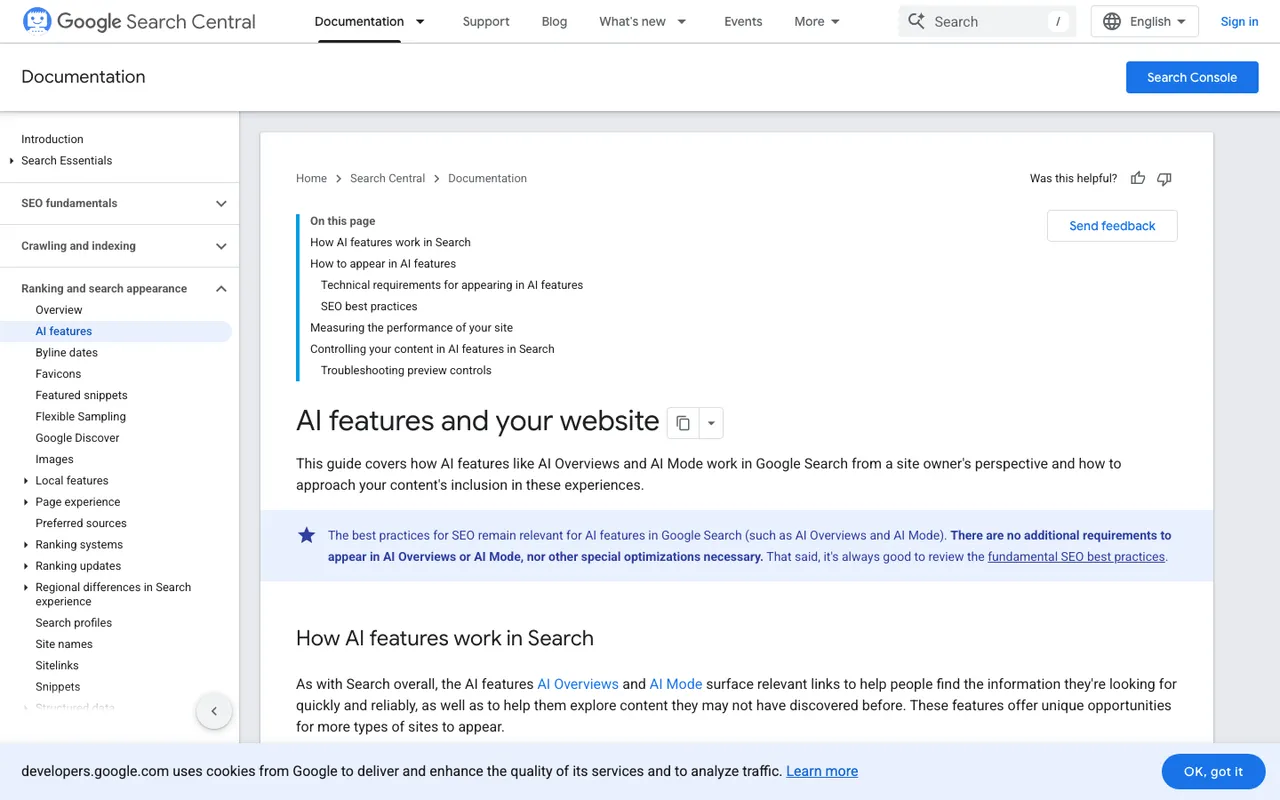
Google Search Central, "AI features and your website", captured November 21, 2026.
For us that means the first audit on any AI content project is the same one we've always run. Can Google crawl and index the blog? Are internal links pointing at the pages that matter? Is the important content in text rather than buried in images or scripts? Google lists those exact practices for AI features. A brilliant article on a page that isn't indexed earns nothing anywhere.
ChatGPT adds one requirement of its own. OpenAI's help article on ChatGPT search says sites should allow OAI-SearchBot and accept traffic from OpenAI's published search bot IP ranges. A firewall or CDN bot rule can block it without anyone on the marketing side noticing, so we check this before a single article is written.
What we look for in the writer itself
Once the foundations hold, the writer earns its keep in three places.
It needs to know what to write about. Keyword lists still help for Google, but AI answers are driven by prompts and by the sub-searches engines run behind them. A writer that can start from a prompt we're losing, or from a page an engine already cites, saves our strategists hours.
It needs to produce the formats engines cite. Promptwatch's content-type report for ChatGPT (Sep 28 to Oct 4, 2026) had product and landing pages in front, listicles third, and how-to guides fourth. General articles made up 6.1% of that sample, so a writer that only turns out essay-style posts misses most of the mix.
It needs to hand off cleanly. Drafts go to an editor on our side, then to the client's CMS. A writer that publishes to WordPress or Webflow directly removes a copy-paste step where mistakes creep in.
Plenty of good tools cover the second point. Surfer, Clearscope, and Frase all help a writer structure and score a draft, and we don't tell clients to rip them out if their team likes them.
Why our programs run on Promptwatch
The first and third points, and everything that happens after publishing, are why our client programs run on Promptwatch. We track each client's buyer prompts there, and the Content Agent writes from those prompts, from query fanouts, or from cited pages, with up to five competitor URLs in the brief. On Business it works to a publishing calendar with a review inbox, which is how we like it: our editors approve every piece before it goes live.
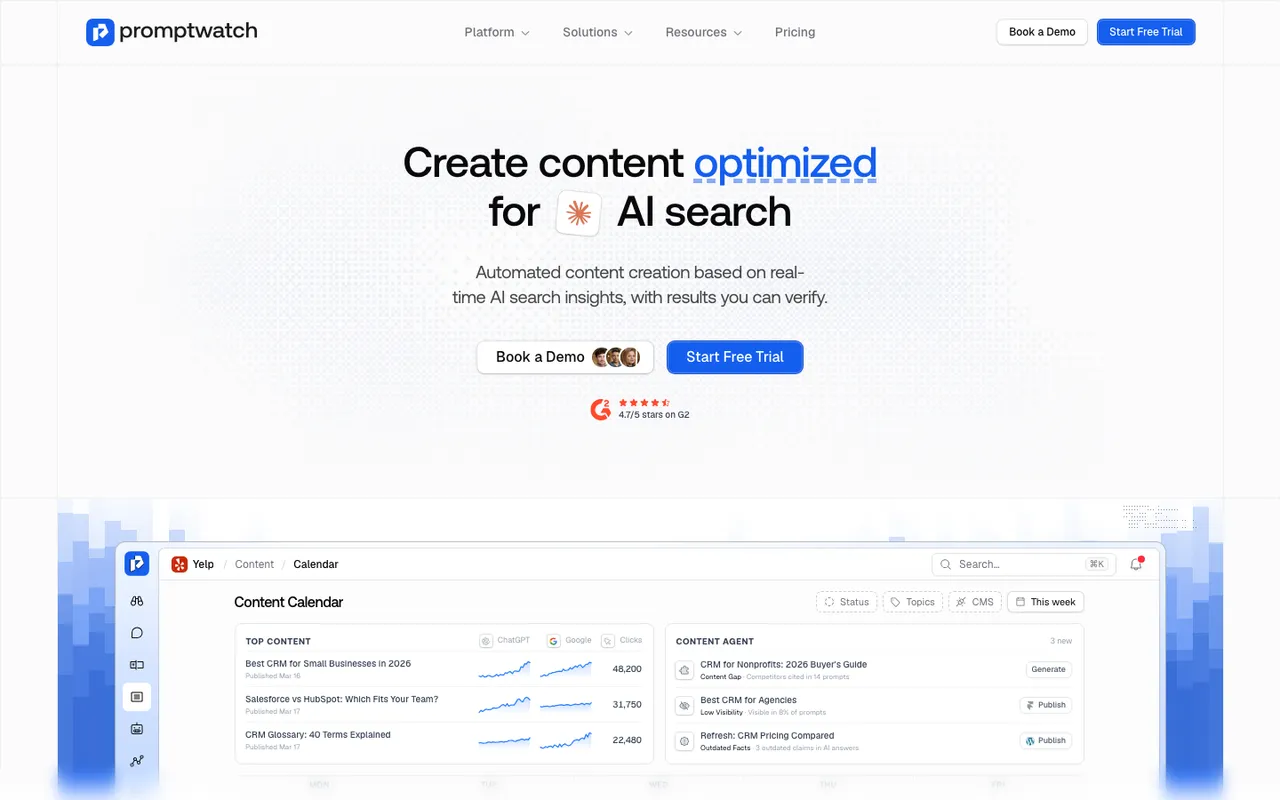
Promptwatch Content Agents page, captured November 8, 2026.
After publishing, the same workspace shows whether GPTBot, OAI-SearchBot, or ChatGPT-User fetched the page (crawler logs start on Professional), whether any tracked answer cites it, and whether AI-referred visitors converted. Search Insights puts Google Search Console and Bing Webmaster clicks next to that, so we can report SEO and AI search results side by side instead of in two decks.
One honest limit: no tool tells you how long a crawl takes to become a citation. Promptwatch's Citation Trends measures ramp-up days per page, but there's no published benchmark, so we set expectations per client rather than promising a timeline.
If you're choosing this quarter
Fix crawlability and indexing first. Pick a writer your editors can live with. Then put measurement around it so you can see which articles actually earn citations. If you want to test that last part yourself, Promptwatch's 7-day free trial on monthly billing is enough to connect a site, add your prompts, and see where you stand.