How can I understand which products are being recommended in ChatGPT's new shopping feature? Our agency's audit
How our SEO agency audits which products ChatGPT's shopping feature recommends for a client, and where Google Shopping work and product feeds still matter.
Ecommerce clients started asking us about ChatGPT's shopping results the same way they once asked about Google Shopping: who is showing up for our category, and why is it not us? The honest first answer is that nobody outside OpenAI knows the ranking rules. The useful second answer is that you can measure the results well enough to act on them. This is the audit we run.
Start from what each platform documents
Our clients usually have years of Google Shopping work behind them, so we begin by separating what carries over from what does not.
On Google's side, the merchant listing documentation in Search Central describes Product markup that makes a page eligible for shopping experiences in Search, and Google says page structured data plus a Merchant Center feed gives the widest eligibility. Google's AI features guidance adds that keeping Merchant Center information up to date is part of good practice for AI Overviews and AI Mode.
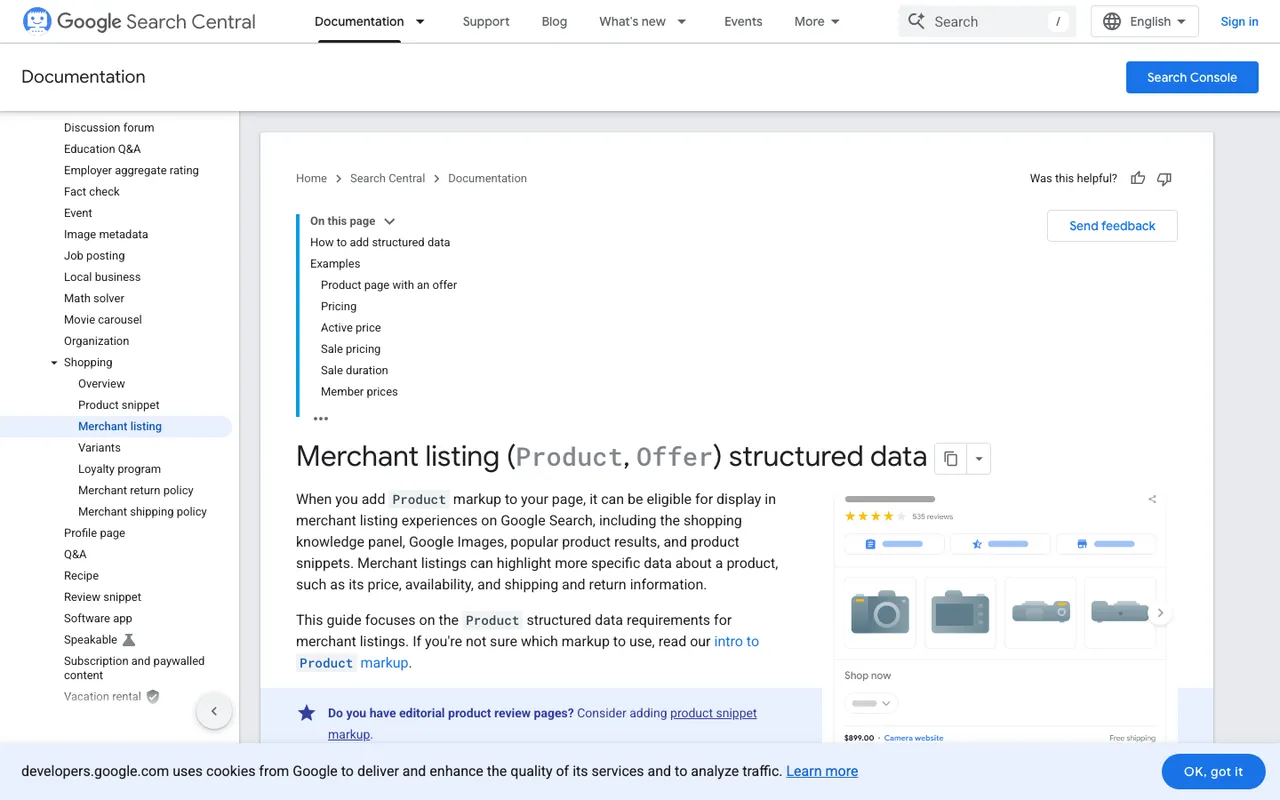
Google Search Central, "Merchant listing (Product, Offer) structured data", captured November 21, 2026.
OpenAI works differently. It asks merchants for a product feed, not markup. Its merchants page is clear that a feed is optional because ChatGPT already crawls sites, but that a feed gives more control over how products appear. Shopify and Etsy catalogs are already connected. Shopping is live for ChatGPT users in the U.S., and buyers check out on the merchant's own site.
So the Merchant Center feed and the structured data stay. A separate OpenAI feed gets added to the plan where the client qualifies, and none of it is sold as a ranking trick, because neither company says it is one.
Step 1: write the buying questions
We pull category and comparison queries from the client's Search Console and paid search data, then rewrite them the way people talk to ChatGPT: "best waterproof hiking boots for wide feet under $200" rather than "waterproof hiking boots wide". We keep a separate group for brand comparisons. Commercial and transactional questions matter most, because that is where Promptwatch's own shopping usage report sees product features show up far more often than on other prompts.
Step 2: run them where the cards are recorded
We run client programs on Promptwatch. Its ChatGPT Shopping module, on the Business plan and Enterprise, records the product carousels in ChatGPT answers and Amazon Alexa product results. We upload the client's catalog so their SKUs are matched, and we filter by model and date to see what changed. The monitor runs in the U.S., because that is where the feature is live.
Step 3: read the cards next to the sources
The product list alone tells you who is winning. The citations tell you why ChatGPT might think so. For each prompt we look at which review sites, retailers and brand pages were cited. In practice this is where classic digital PR and SEO come back in: if the same two review roundups keep getting cited and the client is not in either, that is a pitching target, not a technical fix.
Step 4: strip out the paid layer
OpenAI says ads are shown underneath a response and kept out of the answer itself. We still track them, because a client wants to know whether a competitor is buying the space under the answer they are trying to win organically. Promptwatch's Ads Radar logs each of those ads next to its advertiser and triggering prompt.
Step 5: check the plumbing and the visits
Agent Analytics tells us whether OAI-SearchBot reaches the product pages at all; OpenAI's crawler page warns that blocking it keeps a site out of ChatGPT's search answers. Visitor analytics then shows whether ChatGPT sends buyers who convert. Since Promptwatch's changelog records that ChatGPT stopped passing a referrer on October 8, 2026, we switch on its option to count utm_source=chatgpt.com visits.
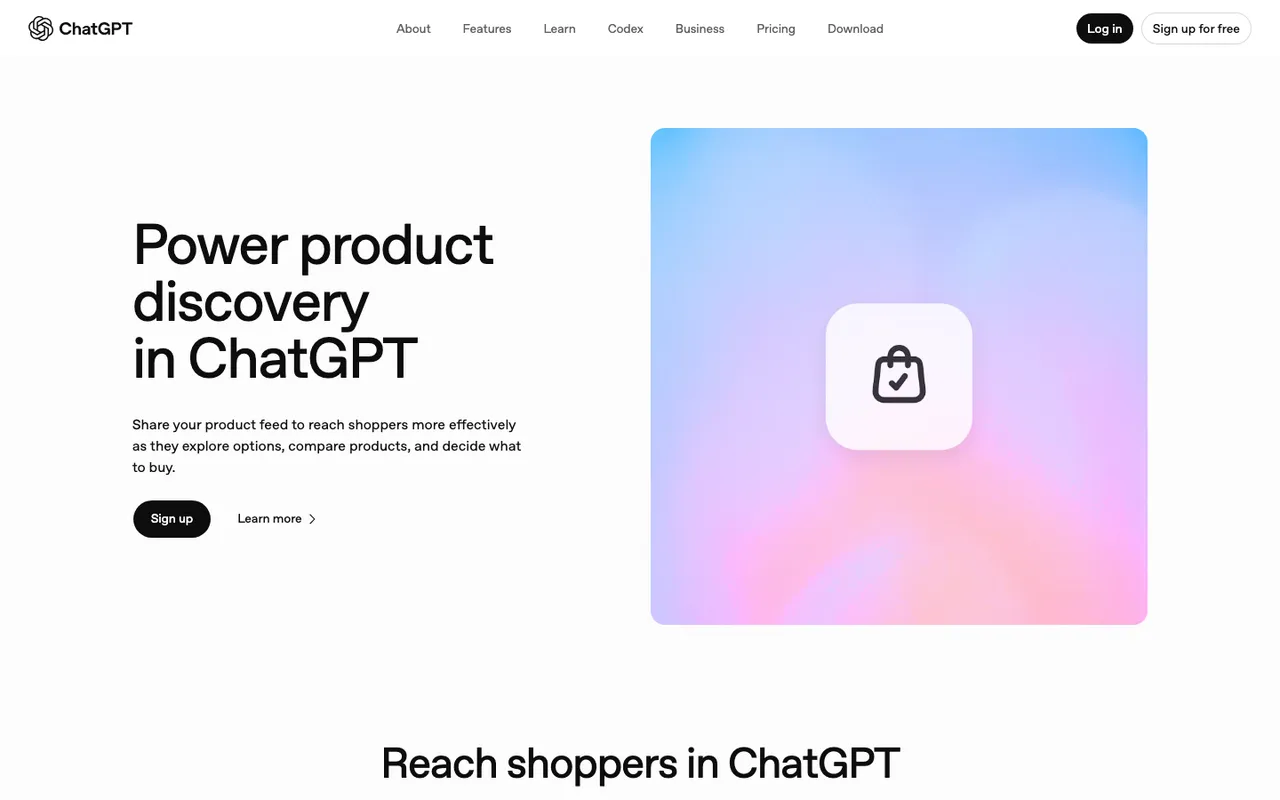
ChatGPT's merchants page, captured November 21, 2026.
What clients get from it
A clear list of which products ChatGPT recommends in their category, which merchants it links to, where the client is missing, and a short plan: feed and product data fixes, content for the gaps, and outreach to the sources that keep getting cited. We do not promise placement, and neither does OpenAI.
To see your own category first, book a Promptwatch demo and ask for the Shopping view on your top buying questions. When you want the full audit, email us and we will scope it around what the demo showed.